The SABRENT Dual-Bay USB-C Hard Drive Docking Station & Cloner review is for anyone who wants one dock to handle two SATA drives, move files to a computer, and clone drives without one.
Its dual-bay design is especially useful for maintenance and migration tasks involving 2.5- or 3.5-inch hard drives.
SABRENT Dual-Bay Dock Review Summary
The quick verdict
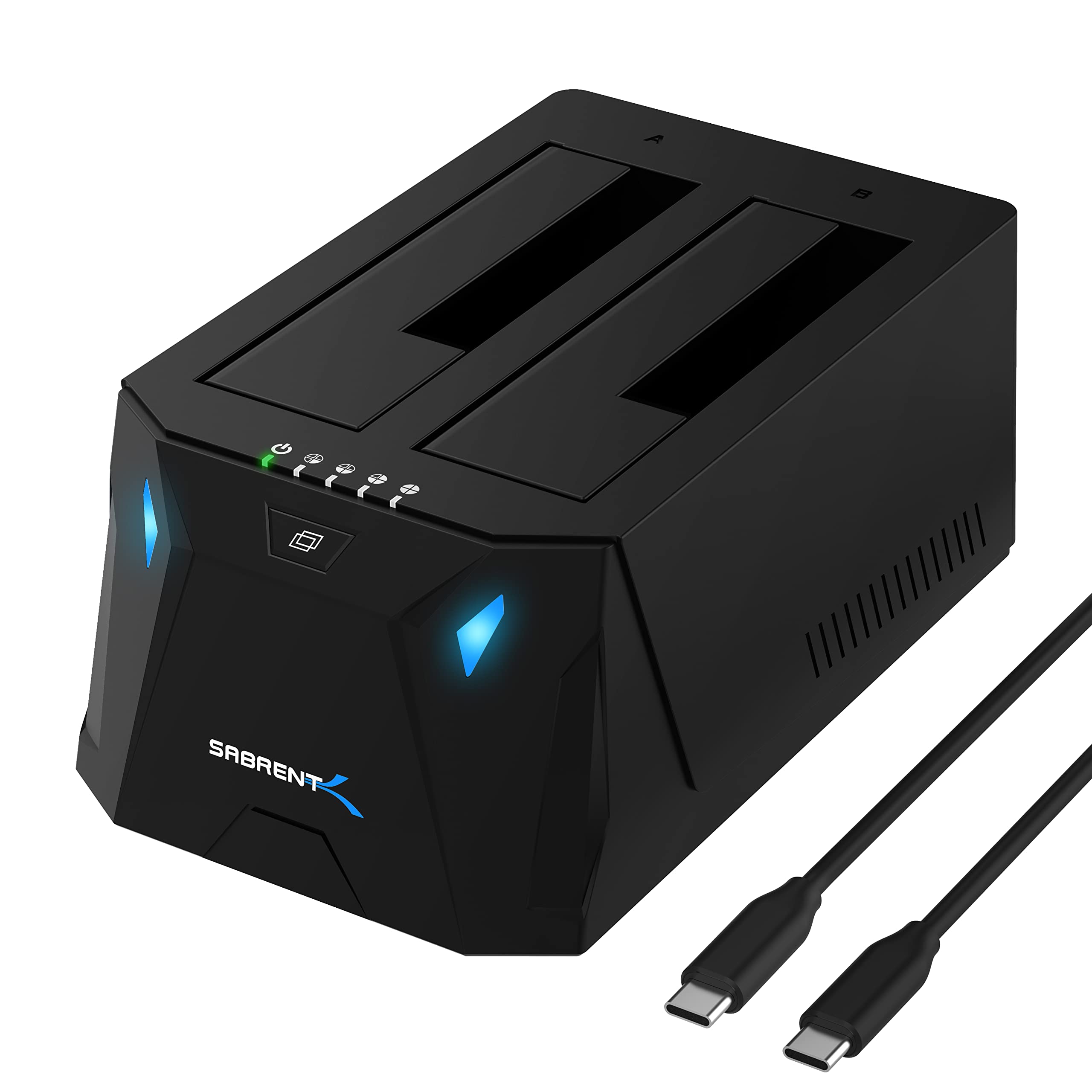
1,000+ ratings
Read Amazon ReviewsSABRENT Dual-Bay USB-C Hard Drive Docking Station & Cloner
A practical fit for people who regularly access two 2.5- or 3.5-inch SATA drives and want computer-based transfers plus offline cloning.
- Two bays support reading and writing two hard drives simultaneously.
- Offline cloning copies drives without requiring a computer, at speeds up to 60MBps.
- USB 3.0 computer connection supports transfer speeds up to 5Gbps.
- Compatible with 2.5- and 3.5-inch SATA hard drives.

Pros
- Combines two-drive computer access and offline cloning in one dock.
- Handles both 2.5- and 3.5-inch SATA drives, including capacities over 20TB.
Consider before buying
- The offline cloning rate is up to 60MBps, so large migrations may take considerable time.
- The listed compatibility is specific to 2.5- and 3.5-inch SATA drives; check your drive interface and form factor before buying.
Read the full review summary
This dock combines simultaneous read and write access to two drives with offline cloning, so it can serve as both a workbench for managing drives and a tool for direct drive-to-drive copying.
For computer-connected transfers, it uses USB 3.0 and supports speeds up to 5Gbps; the description also gives an offline cloning rate of up to 60MBps.
Those are maximum figures, so actual transfer time depends on the drives and task.
It suits people who rotate through SATA drives, recover files from older storage, or want a straightforward way to copy one drive to another.
The tool-free, hot-swappable design points to convenient drive changes, while Windows and Mac OS compatibility widens its potential use. Check that your drives are SATA and that the stated cloning speed and capacity support match your migration needs.
The buying factors
SABRENT Dual-Bay Dock Scorecard
Editorial scores reflect listed features and buyer fit; they are not laboratory measurements or customer ratings.
Two-drive workflow
The dock is designed to read and write two drives simultaneously, which is useful for transfers and comparing or organizing drive contents.
Offline cloning
Direct cloning works without a computer, with a stated maximum rate of 60MBps. That offers convenience, though it is not a high-speed migration solution.
Computer transfer ceiling
USB 3.0 supports transfer speeds up to 5Gbps for computer-connected use. This is a link maximum, not a promise of sustained drive performance.
Drive compatibility
Support for both 2.5- and 3.5-inch SATA HDDs and capacities over 20TB gives it a broad stated range for common SATA storage.
Setup convenience
Tool-free installation, hot swapping, and an HDD access LED are helpful for repeated drive changes and status checks.
Platform flexibility
Windows and Mac OS support makes it suitable for many desktop workflows, though the description does not specify other operating systems.
Key Features and Specifications of SABRENT Dual-Bay Dock
- Two bays support reading and writing two hard drives simultaneously.
- Offline cloning copies drives without requiring a computer, at speeds up to 60MBps.
- USB 3.0 computer connection supports transfer speeds up to 5Gbps.
- Compatible with 2.5- and 3.5-inch SATA hard drives.
- Supports drives over 20TB.
- Tool-free installation, hot swapping, and an HDD access LED indicator.
- Works with Windows and Mac OS.
Pros and Cons of SABRENT Dual-Bay Dock
Pros
- Combines two-drive computer access and offline cloning in one dock.
- Handles both 2.5- and 3.5-inch SATA drives, including capacities over 20TB.
- Tool-free installation and hot swapping make drive changes simpler.
- USB 3.0 offers a higher connection ceiling than older USB standards.
Consider before buying
- The offline cloning rate is up to 60MBps, so large migrations may take considerable time.
- The listed compatibility is specific to 2.5- and 3.5-inch SATA drives; check your drive interface and form factor before buying.
- The description specifies Windows and Mac OS but does not detail other operating-system support, so verify compatibility if your setup uses another platform.
Who Should Buy SABRENT Dual-Bay Dock?
Good fit
Consider this dock if you regularly connect bare SATA drives to a computer and want both bays available at once.
Simultaneous read and write access can make it easier to move files between drives or work with two storage devices without repeatedly swapping connections.
It is also a sensible option for occasional direct cloning when you want the process to run without a computer.
The up-to-60MBps cloning rate is a useful planning detail: for a large drive, allow ample time and confirm that the target drive has enough capacity for the data you intend to copy.
The fit is strongest for Windows or Mac users with 2.5- or 3.5-inch SATA drives.
Before relying on it for a specific migration, check the source and destination drive capacities and interfaces, and make sure a maximum cloning speed of 60MBps suits your schedule.
Who should skip it
Skip it if your storage is not a 2.5- or 3.5-inch SATA drive; the described compatibility does not establish support for other drive types.
Choose another approach if a large offline clone needs to finish quickly. The stated cloning rate is up to 60MBps, so estimate the time against the amount of data you need to copy.
How the SABRENT Dual-Bay Dock Fits a Drive Workflow
Two bays for active drive work
Having two drives connected at once is the dock’s central practical advantage. It can support workflows such as reading one drive while writing to another, avoiding the need to alternate between a source and destination during computer-connected work.
Offline cloning requires time planning
Cloning without a computer can simplify a direct migration, but the stated maximum of 60MBps is modest for large capacity drives.
Treat that as a best-case ceiling when planning a copy, and consider how much data needs to move rather than relying on the drive’s full capacity alone.
A broad but specific SATA fit
Support for both 2.5- and 3.5-inch SATA hard drives, including drives over 20TB, covers a wide range of common hard-drive sizes.
The compatibility details still matter: confirm the drive is SATA and within the supported physical formats before making it part of a backup or migration plan.
Computer connection and ease of use
USB 3.0 provides a maximum connection speed of up to 5Gbps, while plug-and-play behavior and hot swapping can reduce setup friction when changing drives.
The HDD access LED adds a simple status cue, though the speed ceiling alone cannot predict real transfer times.
Alternatives to SABRENT Dual-Bay Dock
Hard Drive Docking Stations alternative
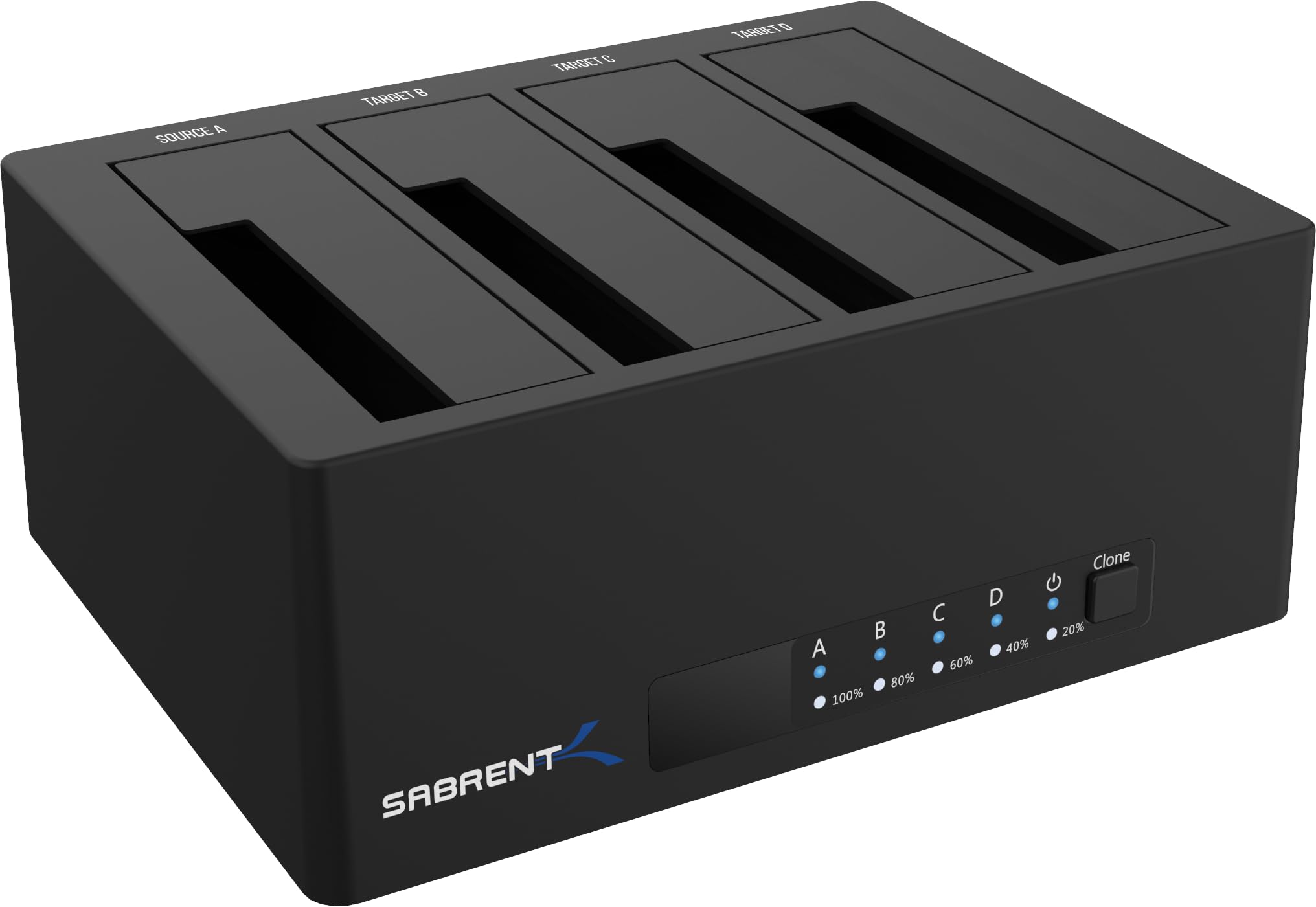
17,000+ ratings
Read Amazon ReviewsSABRENT 4-Bay USB 3.0 Hard Drive Docking Station & Cloner (DS-U3B4)
Choose the main dock for a two-drive setup and its stated support for drives over 20TB.
Consider the DS-U3B4 if keeping as many as four SATA drives accessible in one station is more important; its described design emphasizes multi-drive management and clone progress indicators.
- The DS-U3B4 accommodates up to four 2.5- or 3.5-inch SATA HDDs or SSDs, connects over USB 3.0 at up to 5Gbps, and offers offline cloning with LED progress indicators.
- The Dual-Bay USB-C dock handles two 2.5- or 3.5-inch SATA drives and provides offline cloning, with USB 3.0 transfers up to 5Gbps.
Hard Drive Docking Stations alternative
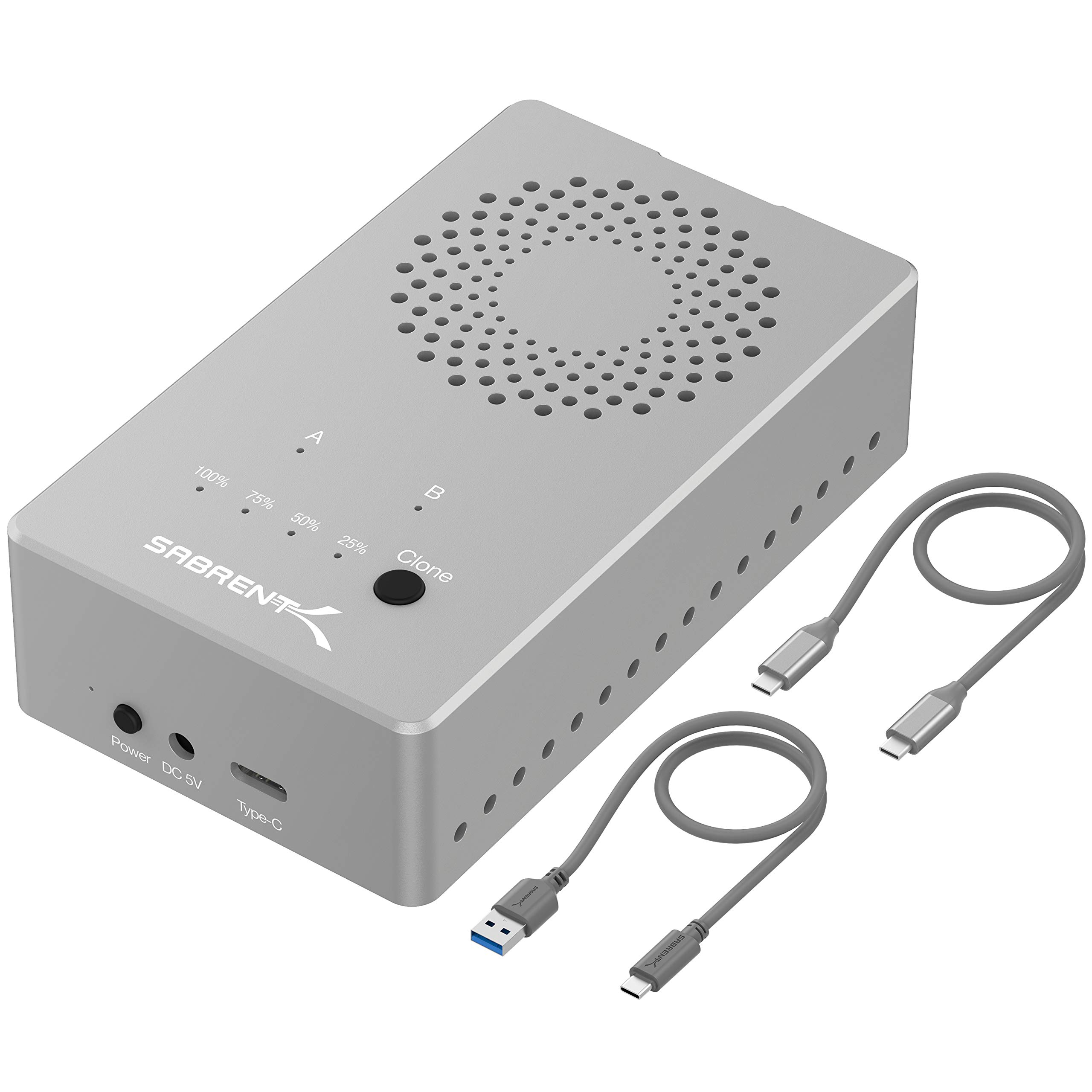
17,000+ ratings
Read Amazon ReviewsSABRENT Dual-Bay USB-C NVMe M.2 SSD Cloner (EC-SSD2)
Choose the main dock for 2.5- or 3.5-inch SATA hard drives.
Consider the EC-SSD2 if your source and target are supported NVMe M.2 SSDs and you want its higher stated USB speed ceiling; check the SSD protocol and size carefully before choosing.
- The EC-SSD2 is built for NVMe M.2 SSDs in 2230, 2242, 2260, or 2280 sizes, supports offline cloning, and offers USB 3.2 speeds up to 10Gbps.
- It is not compatible with regular M.2 SATA or AHCI SSDs.
- The main dock is for 2.5- and 3.5-inch SATA hard drives and uses USB 3.0, with transfer speeds up to 5Gbps.
Is SABRENT Dual-Bay Dock Worth It?
The SABRENT Dual-Bay USB-C Hard Drive Docking Station & Cloner is worth considering for Windows or Mac users who need to connect two 2.5- or 3.5-inch SATA drives, transfer files, and occasionally clone a drive offline.
Its tool-free setup, hot swapping, and stated support for drives over 20TB make it a versatile fit for a home or repair bench.
The main tradeoff is cloning speed: up to 60MBps calls for patience with larger migrations. Confirm your drive type and capacity, and choose it when two-bay SATA access matters more than fast offline cloning.
Your review at a glance
1,000+ ratings
Read Amazon ReviewsSABRENT Dual-Bay USB-C Hard Drive Docking Station & Cloner
A practical fit for people who regularly access two 2.5- or 3.5-inch SATA drives and want computer-based transfers plus offline cloning.
- Two bays support reading and writing two hard drives simultaneously.
- Offline cloning copies drives without requiring a computer, at speeds up to 60MBps.
- USB 3.0 computer connection supports transfer speeds up to 5Gbps.
- Compatible with 2.5- and 3.5-inch SATA hard drives.