The KODAK Slide N Scan Max is designed to turn common slide and negative formats into digital files without making a computer central to the process.
In this kodak slide n scan max review, the strongest case is its combination of quick-feed handling, SD-card saving, and simple editing for home archiving.
Slide N Scan Max Review Summary
The quick verdict
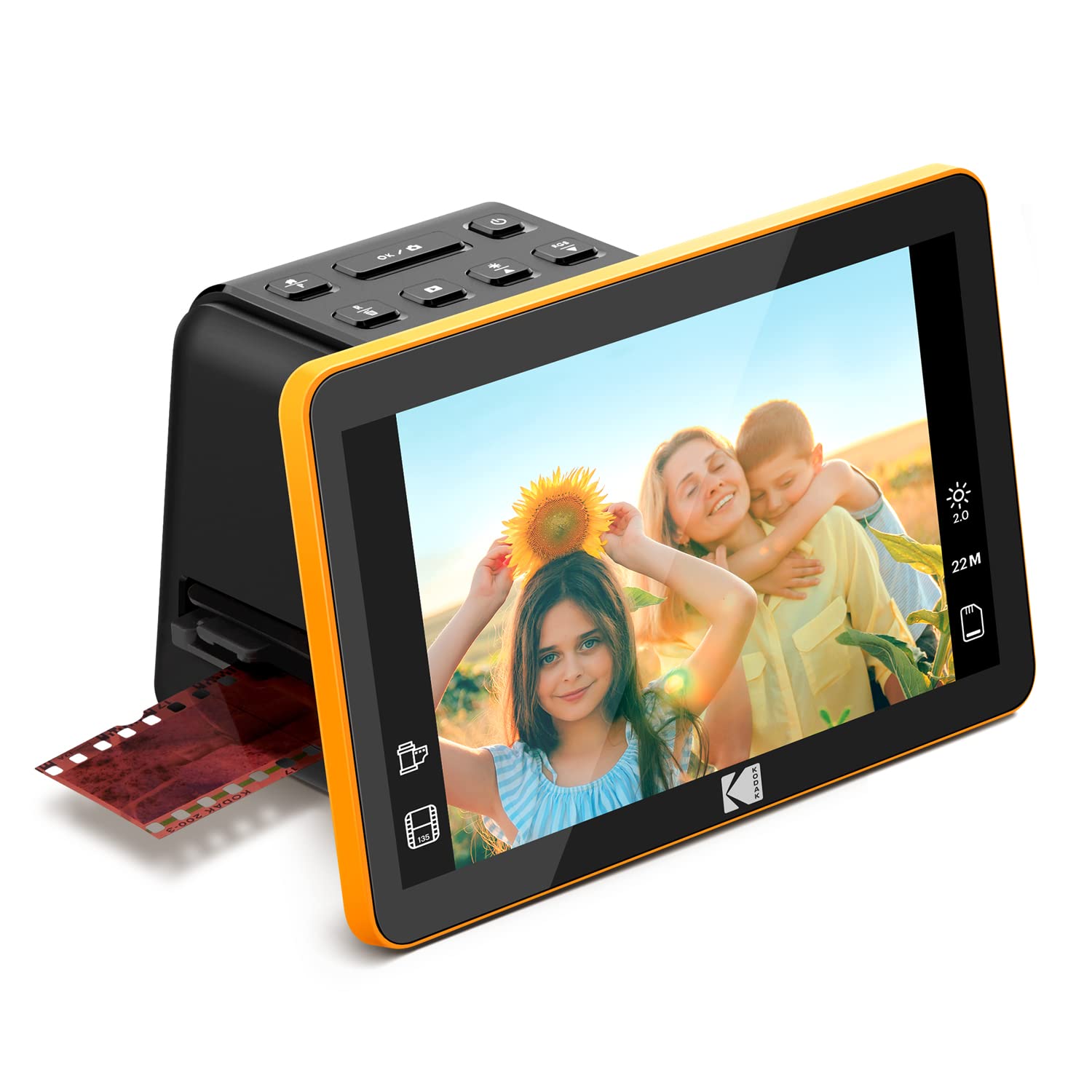
1,000+ ratings
Read Amazon ReviewsKODAK Slide N Scan Max
A practical fit for families digitizing 135, 110, or 126 film who want direct SD-card saving and straightforward onboard edits.
- Handles 135, 110, and 126 film formats, including slides and color or black-and-white negatives.
- Uses a smooth-moving tray intended to feed film with less repeated repositioning.
- Saves scans directly to SD or SDHC cards up to 32GB.
- Combines a 13MP CMOS sensor with interpolated output up to 4208 × 3120.

Pros
- Direct-to-card saving supports a simple standalone digitizing routine.
- The tray feed is designed to reduce the need to reposition film continually.
Consider before buying
- SD and SDHC capacity is limited to cards up to 32GB, so larger archives may call for transferring files between cards or to another storage location.
- The highest output figure uses interpolation; buyers seeking extra captured detail should judge scans by the source film and sensor capture rather than the enlarged pixel dimensions.
Read the full review summary
The Slide N Scan Max brings together support for 135, 110, and 126 film, including slides and color or black-and-white negatives.
Its smooth-moving tray is intended to keep film feeding without constant repositioning, which can make a stack of old frames less tedious to work through.
You can save directly to SD or SDHC cards up to 32GB, then resize, convert, or adjust images with one-touch controls.
The 13MP CMOS sensor supports output up to 4208 × 3120 through interpolation; that maximum is a file-size capability rather than a guarantee that every source frame will gain real detail.
The buying factors
Slide N Scan Max Scorecard
Editorial scores reflect listed features and buyer fit; they are not laboratory measurements or customer ratings.
Film format coverage
Supports 135, 110, and 126 slides and color or black-and-white negatives, covering several common family archive formats.
Standalone workflow
Direct saving to SD or SDHC cards up to 32GB means a computer is not required for the basic capture workflow.
Loading convenience
The smooth-moving tray is designed to feed film without constant repositioning, a useful quality for repeated scanning.
On-device editing
One-touch resizing, conversion, and image adjustment keep routine edits accessible without complex menus.
Output flexibility
Up to 4208 × 3120 output from a 13MP CMOS sensor with interpolation offers sizable files, though interpolation does not add source detail.
Setup flexibility
USB connectivity and a stated Windows 7 minimum system requirement provide a computer connection option, while the core workflow can save to a card.
Key Features and Specifications of Slide N Scan Max
- Handles 135, 110, and 126 film formats, including slides and color or black-and-white negatives.
- Uses a smooth-moving tray intended to feed film with less repeated repositioning.
- Saves scans directly to SD or SDHC cards up to 32GB.
- Combines a 13MP CMOS sensor with interpolated output up to 4208 × 3120.
- One-touch capture software supports resizing, converting, and adjusting images.
- USB connection; the listed minimum computer requirement is Windows 7.
- Compact body measures 6.69 × 5.35 × 4.45 inches and weighs 16 ounces.
Pros and Cons of Slide N Scan Max
Pros
- Direct-to-card saving supports a simple standalone digitizing routine.
- The tray feed is designed to reduce the need to reposition film continually.
- Useful coverage of three film formats and both color and monochrome negatives.
- One-touch editing should be approachable for basic adjustments and conversions.
Consider before buying
- SD and SDHC capacity is limited to cards up to 32GB, so larger archives may call for transferring files between cards or to another storage location.
- The highest output figure uses interpolation; buyers seeking extra captured detail should judge scans by the source film and sensor capture rather than the enlarged pixel dimensions.
- The listed computer requirement specifies Windows 7 but does not clarify other operating-system compatibility; check the current setup documentation if computer use is important.
Who Should Buy Slide N Scan Max?
Good fit
Consider the Slide N Scan Max if you have a mixed collection of 135, 110, and 126 slides or negatives and want a direct path to digital files.
Its card-based workflow can help keep scanning sessions focused on feeding and capturing frames instead of managing a computer at every step.
It is also a sensible match for occasional family archiving where convenience matters more than a highly adjustable editing workflow.
The one-touch controls cover resizing, conversion, and adjustments, while the smooth tray design is aimed at making repeated loading less fussy.
Before choosing it for a large archive, plan how you will organize and back up files from cards capped at 32GB.
Also consider whether the interpolated maximum output suits your intended screen or print use; a larger file dimension does not recover detail absent from the original film.
Who should skip it
Skip this model if your film collection depends on formats outside 135, 110, and 126, or if your required card capacity exceeds 32GB.
If you need a more controlled computer-based workflow, confirm operating-system compatibility and editing needs before buying; the provided details emphasize simple capture and one-touch changes.
What the Slide N Scan Max Means for a Home Film Archive
Tray feeding and scanning pace
The smooth-moving tray is a practical design choice when digitizing several frames in sequence. It is intended to keep film moving without constant repositioning, though careful alignment and handling still matter when preserving older originals.
Three formats, one archive
Support for 135, 110, and 126 formats gives the scanner useful breadth for family collections that span different camera eras.
Confirm the format of your film before starting a large project, especially if your archive includes less common stock.
Card-first file management
Direct saving to SD or SDHC cards up to 32GB can make the scanner usable without a computer beside it.
For a sizable collection, a clear naming and backup routine after each card fills will help keep scans organized.
Understanding interpolated output
The 13MP CMOS sensor and maximum output of 4208 × 3120 combine capture with interpolation.
This can produce larger pixel dimensions for viewing or sharing, but the detail in the negative or slide remains the meaningful limit when evaluating image quality.
Alternatives to Slide N Scan Max
Slide & Negative Scanners alternative
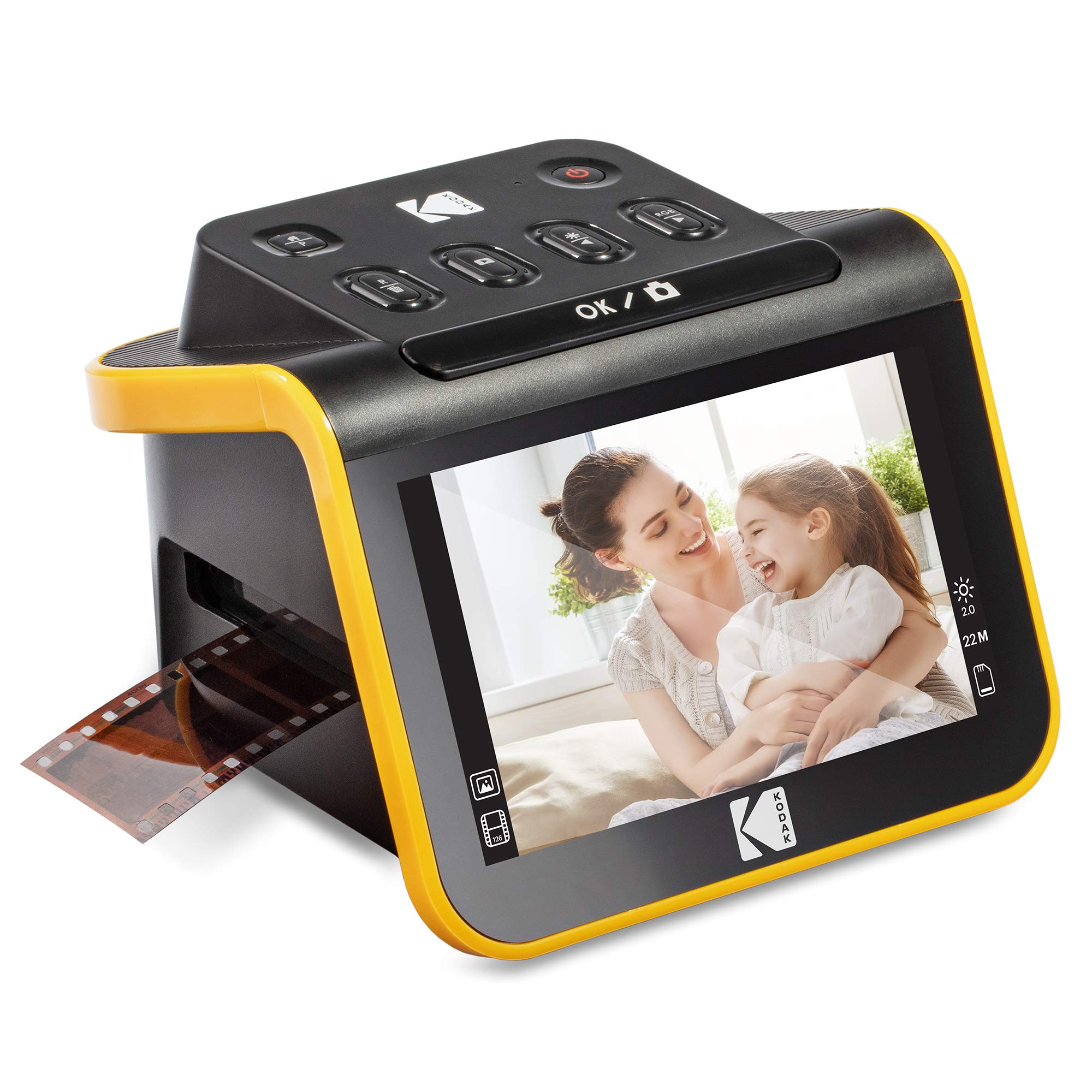
12,000+ ratings
Read Amazon ReviewsKODAK Slide N Scan Film & Slide Scanner
Choose the Slide N Scan Max if its smooth-moving tray and direct card workflow suit your priorities. Consider this screen-equipped model if previewing scans on a built-in display is more useful to you.
- This KODAK model covers 135, 110, and 126 film and adds a 5-inch LCD with gallery mode for previewing and editing; it also supports direct saving to SD or SDHC cards up to 32GB.
- The Slide N Scan Max supports 135, 110, and 126 film, saves directly to cards up to 32GB, and offers one-touch image edits.
Slide & Negative Scanners alternative
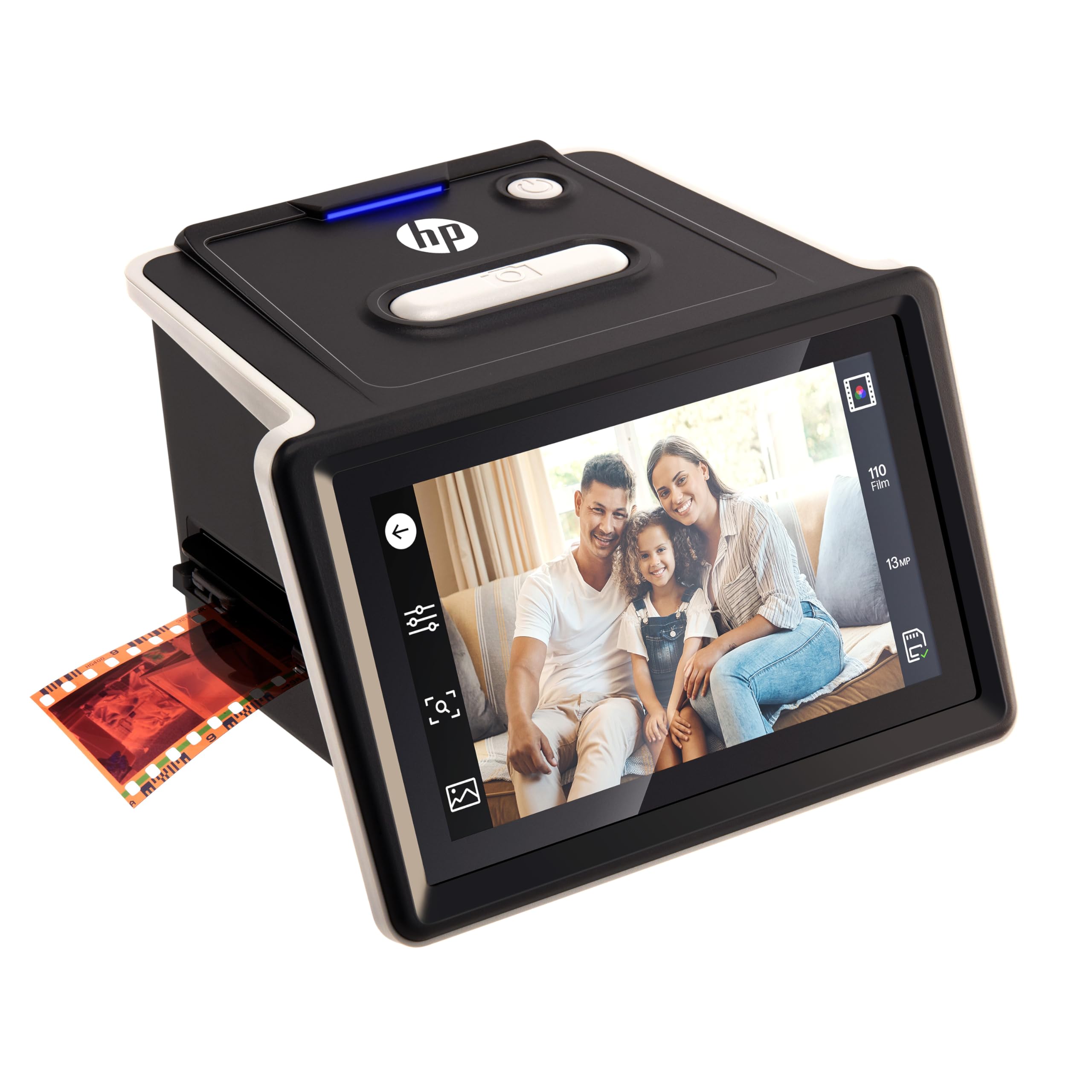
100+ ratings
Read Amazon ReviewsHP FilmScan HPFS500
The KODAK is a fit if you value its described smooth tray and straightforward one-touch edits. The HP may suit you better if an integrated touchscreen preview and editing interface is central to your workflow.
- The HP FilmScan HPFS500 supports 135, 126, and 110 film, has a 5-inch touchscreen for preview and editing, and saves to an SD card.
- Its description gives a 13MP sensor and says scanning can be done without a computer.
- The Slide N Scan Max combines a 13MP CMOS sensor with interpolated output up to 4208 × 3120 and saves to SD or SDHC cards up to 32GB.
Is Slide N Scan Max Worth It?
The KODAK Slide N Scan Max is worth considering for a home archive built around 135, 110, or 126 slides and negatives.
Direct card saving, a feed-oriented tray, and simple onboard edits make it an approachable option for converting memories in batches.
Buy with realistic expectations about interpolated output and the 32GB card limit. If those fit your storage and image-use plans, the Slide N Scan Max offers a straightforward balance of format coverage and convenience.
Your review at a glance
1,000+ ratings
Read Amazon ReviewsKODAK Slide N Scan Max
A practical fit for families digitizing 135, 110, or 126 film who want direct SD-card saving and straightforward onboard edits.
- Handles 135, 110, and 126 film formats, including slides and color or black-and-white negatives.
- Uses a smooth-moving tray intended to feed film with less repeated repositioning.
- Saves scans directly to SD or SDHC cards up to 32GB.
- Combines a 13MP CMOS sensor with interpolated output up to 4208 × 3120.