The best XLR microphones depend on how you record: a USB/XLR model suits a changing setup, while an XLR-only mic can fit an interface-based home studio. These picks cover podcasting, broadcast, gaming, and live vocals, so check the connection, included stand and cable, and USB-only controls before choosing.
Quick Top Products
Samson Q9U
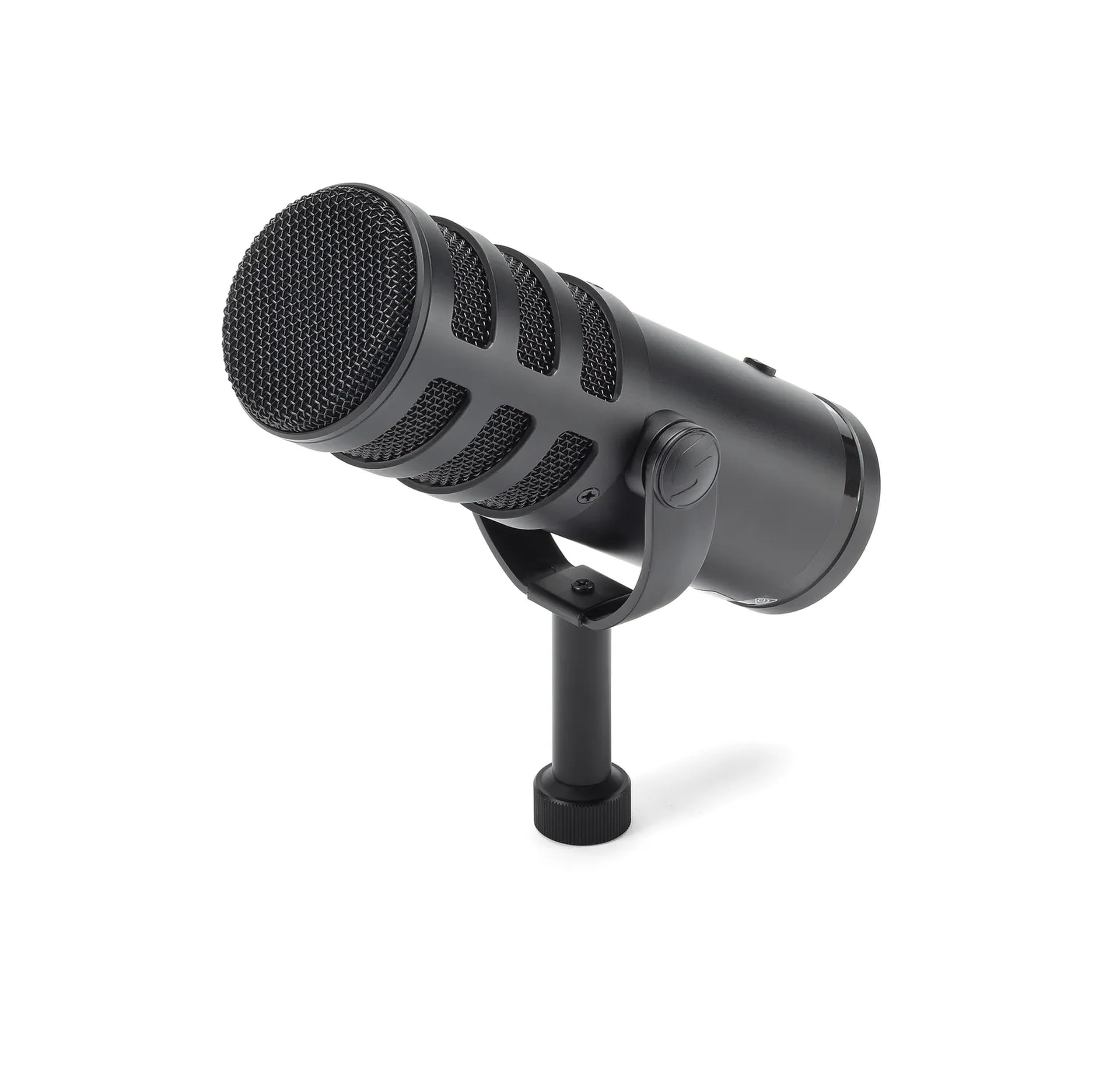
- Works over XLR or USB-C.
- Supports 24-bit/96kHz digital recording over USB.
- Has zero-latency headphone monitoring and an onboard mute switch.
Best For: Podcasters and streamers who want USB-C convenience alongside an XLR studio connection.

MAONO PD400X
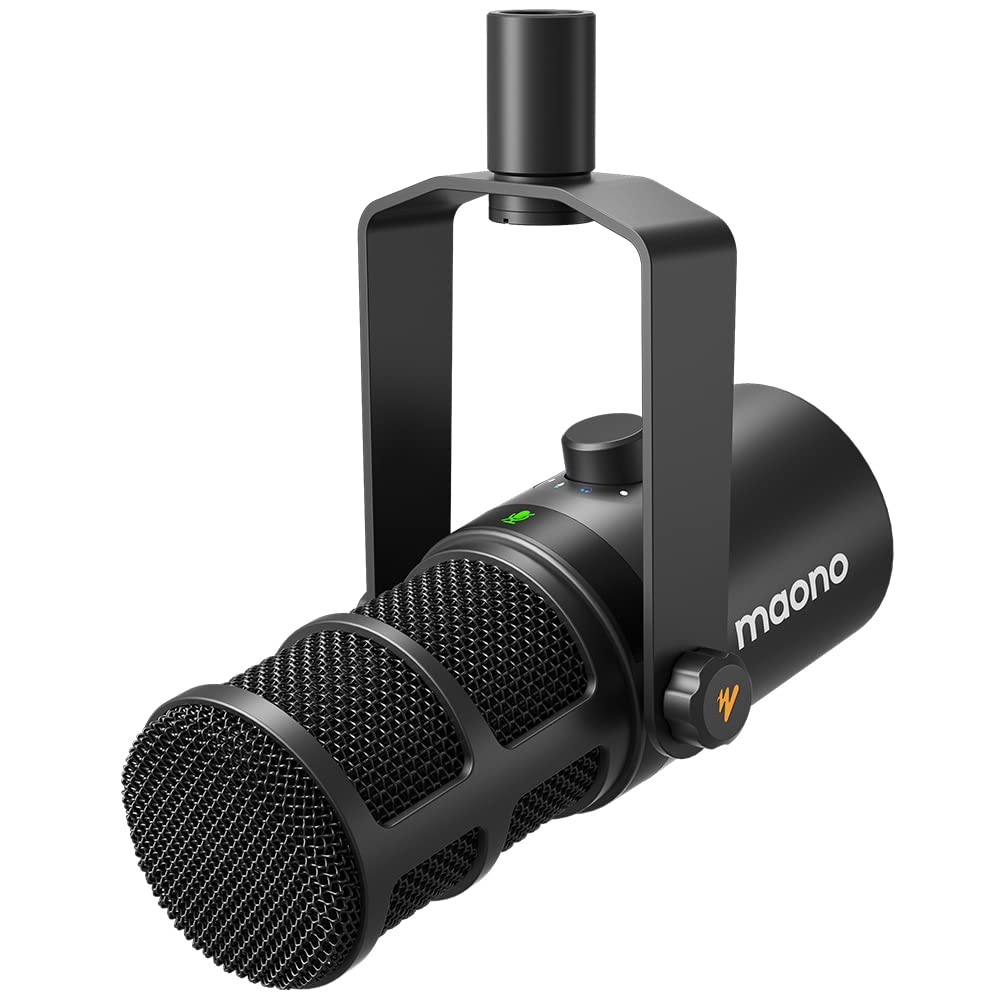
- Connects by USB or XLR.
- Maono Link offers EQ, limiter, and compressor adjustments.
- Its three-in-one knob controls mic gain, headphone volume, and monitor mix.
Best For: Home recordists who want USB and XLR plus software controls for shaping a voice.
MAONO PD300X
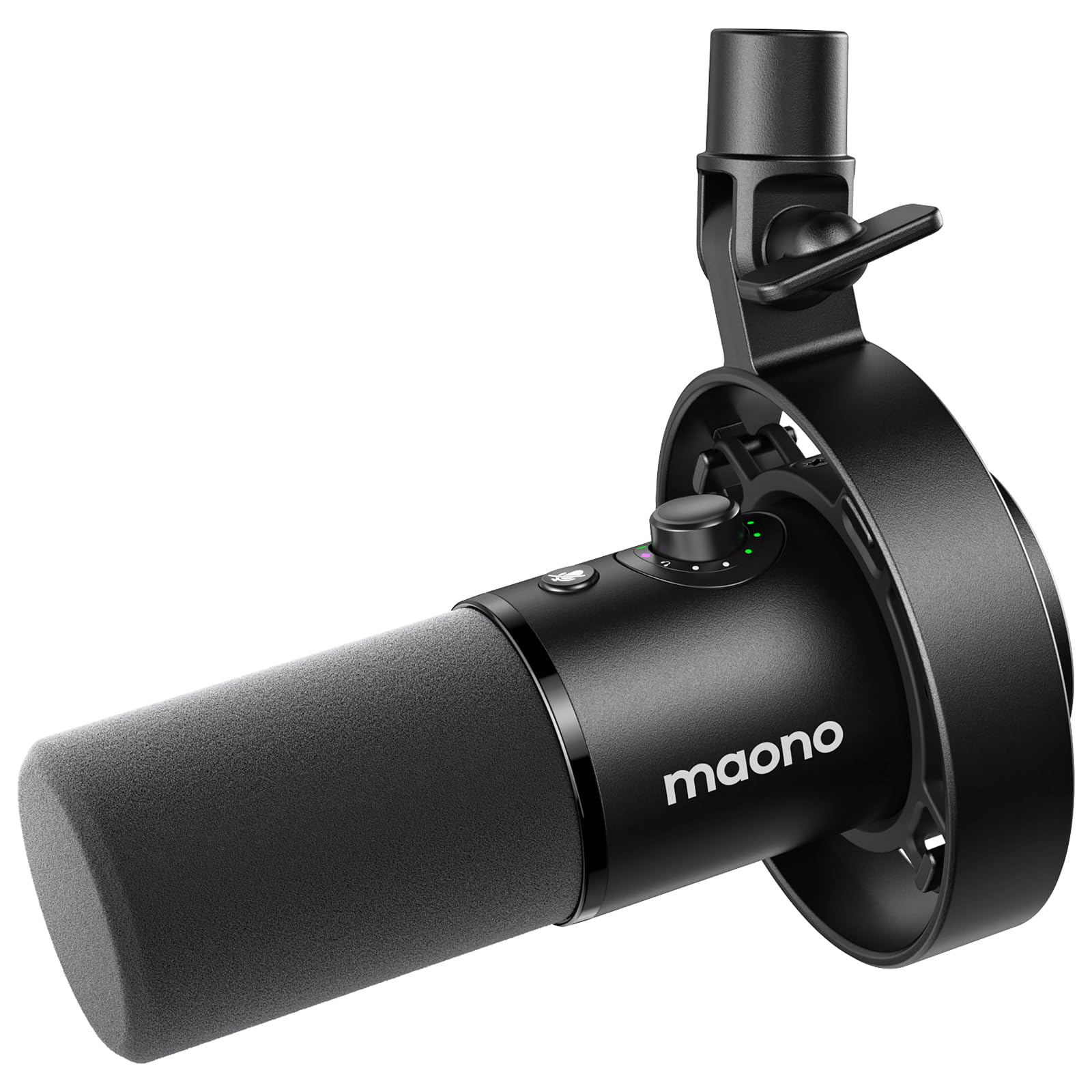
- Supports USB and XLR connections.
- Includes four preset modes for different tasks.
- Has a five-level noise reduction system.
Best For: Creators who want USB/XLR flexibility and software presets for varied recording tasks.
MAONO PD200XS
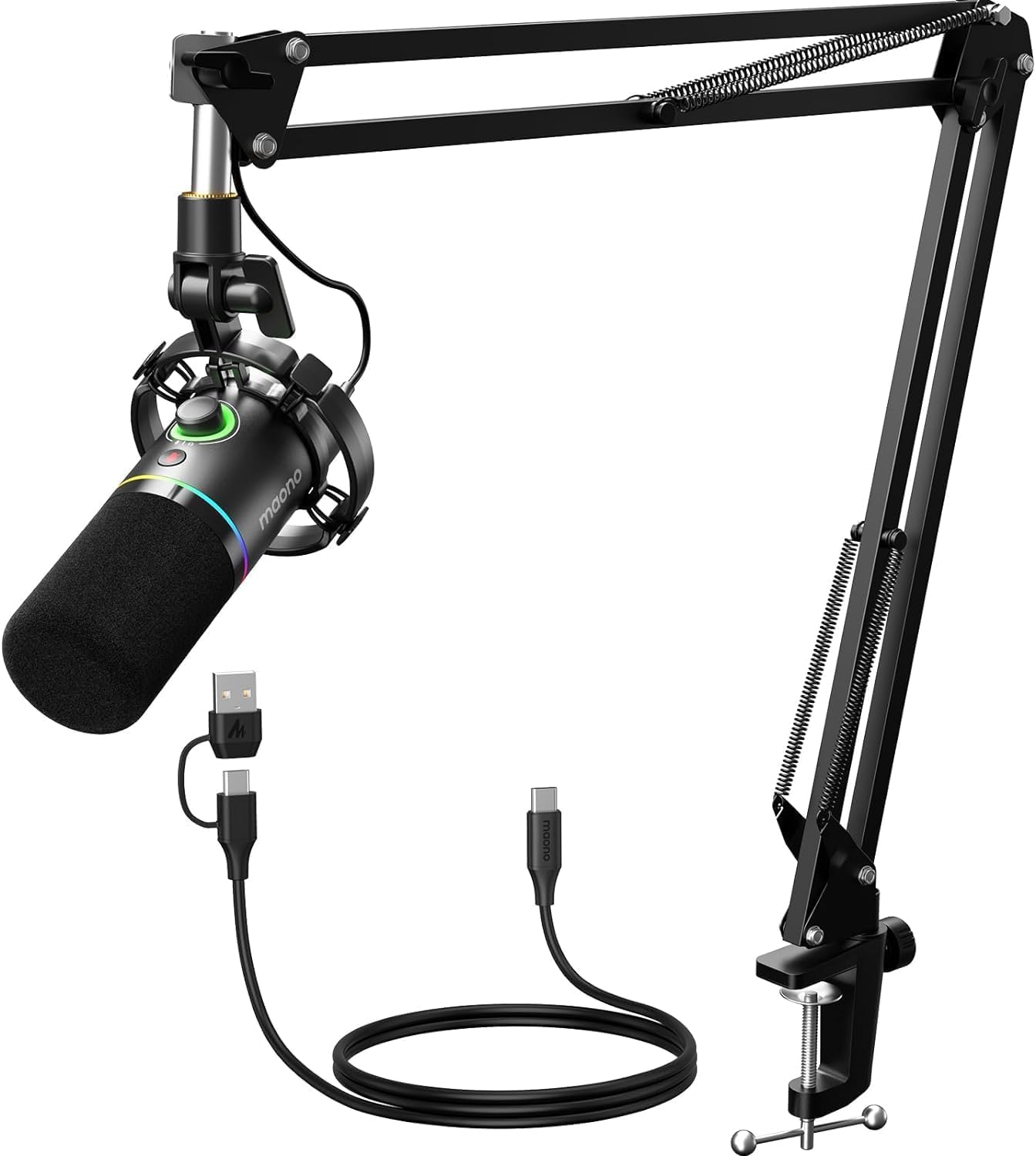
- Offers USB and XLR outputs.
- Includes an adjustable boom arm and shock mount.
- XLR cable is not included.
Best For: Streamers and podcasters seeking a dual-output mic with an included adjustable boom arm.
FIFINE AmpliGame AM8W
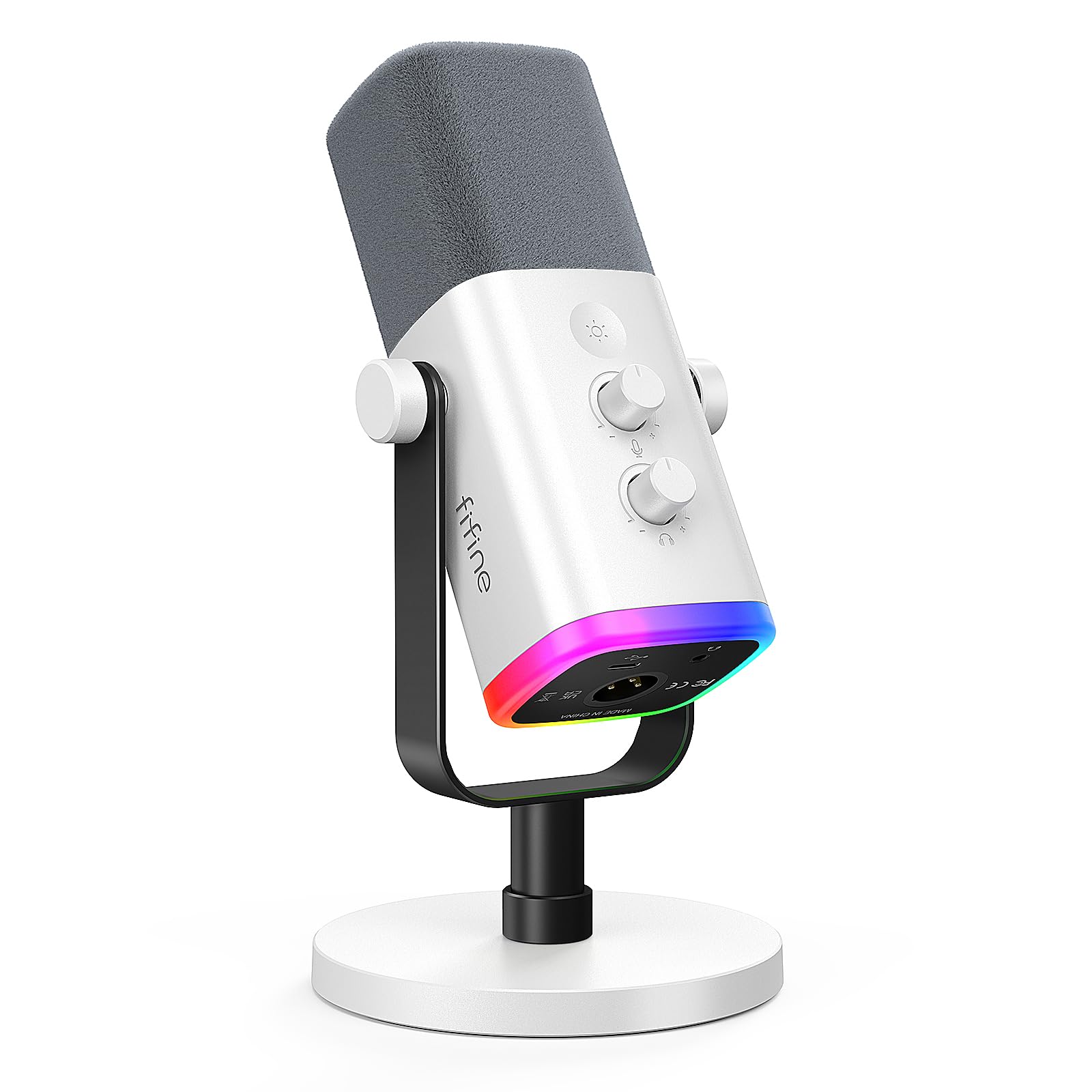
- Connects over USB or XLR.
- USB mode provides RGB lighting and tap-to-mute controls.
- The suggested recording range is 2 to 6 in.
Best For: White-desk streamers who want a compact USB/XLR microphone with onboard controls.
FIFINE AmpliGame AM8T
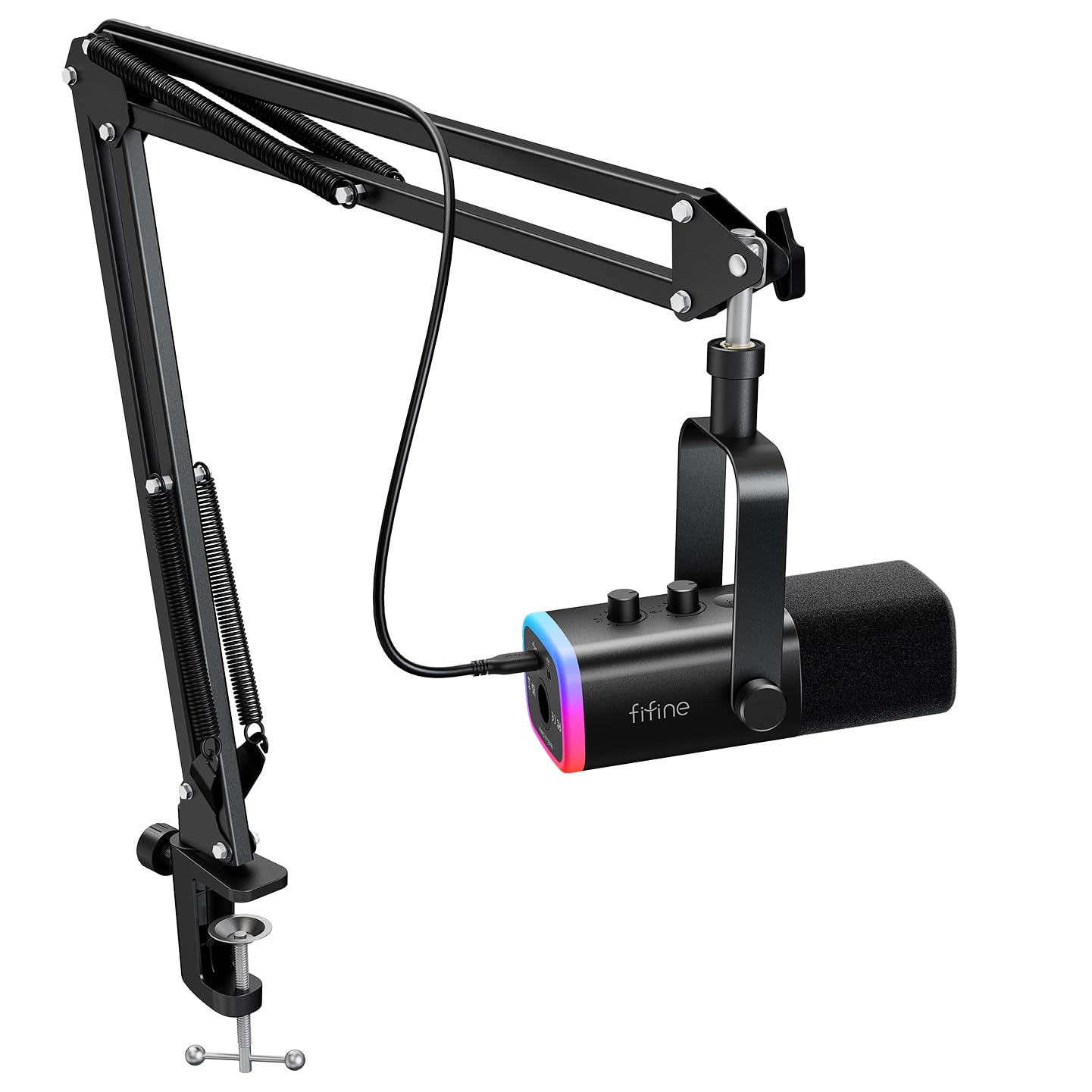
- Includes a metal boom arm and desk clamp.
- USB and XLR support computer and mixer connections.
- The desk clamp fits a desktop thickness less than 2 inch.
Best For: Streamers who want an XLR/USB mic kit with a repositionable boom arm.
FIFINE AmpliTank K688
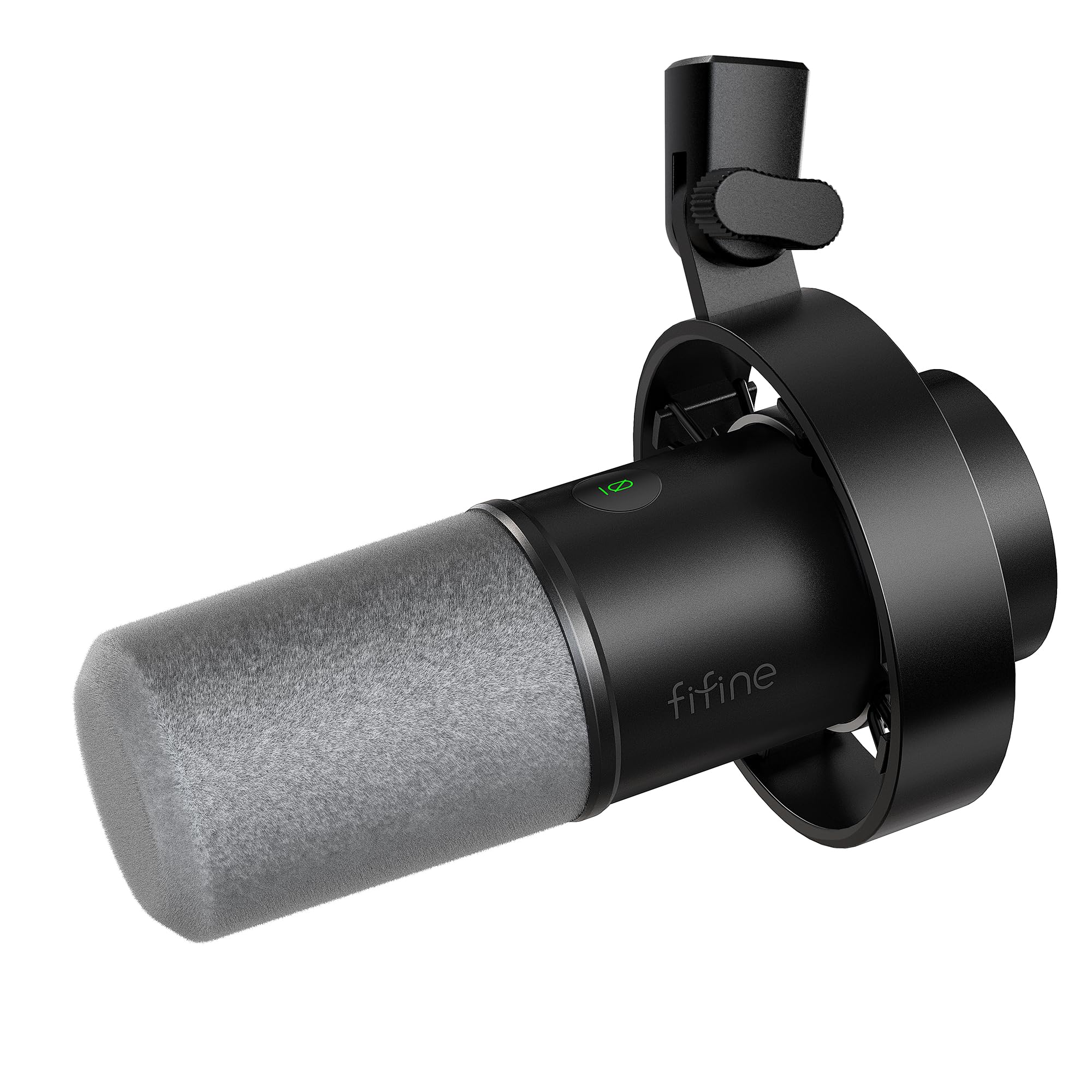
- Includes USB and XLR connections.
- A shock mount and USB cable are included.
- A boom arm, mic stand, and XLR cable are not included.
Best For: Podcast and voiceover creators who already have a stand or boom arm.
FIFINE AmpliTank K688P
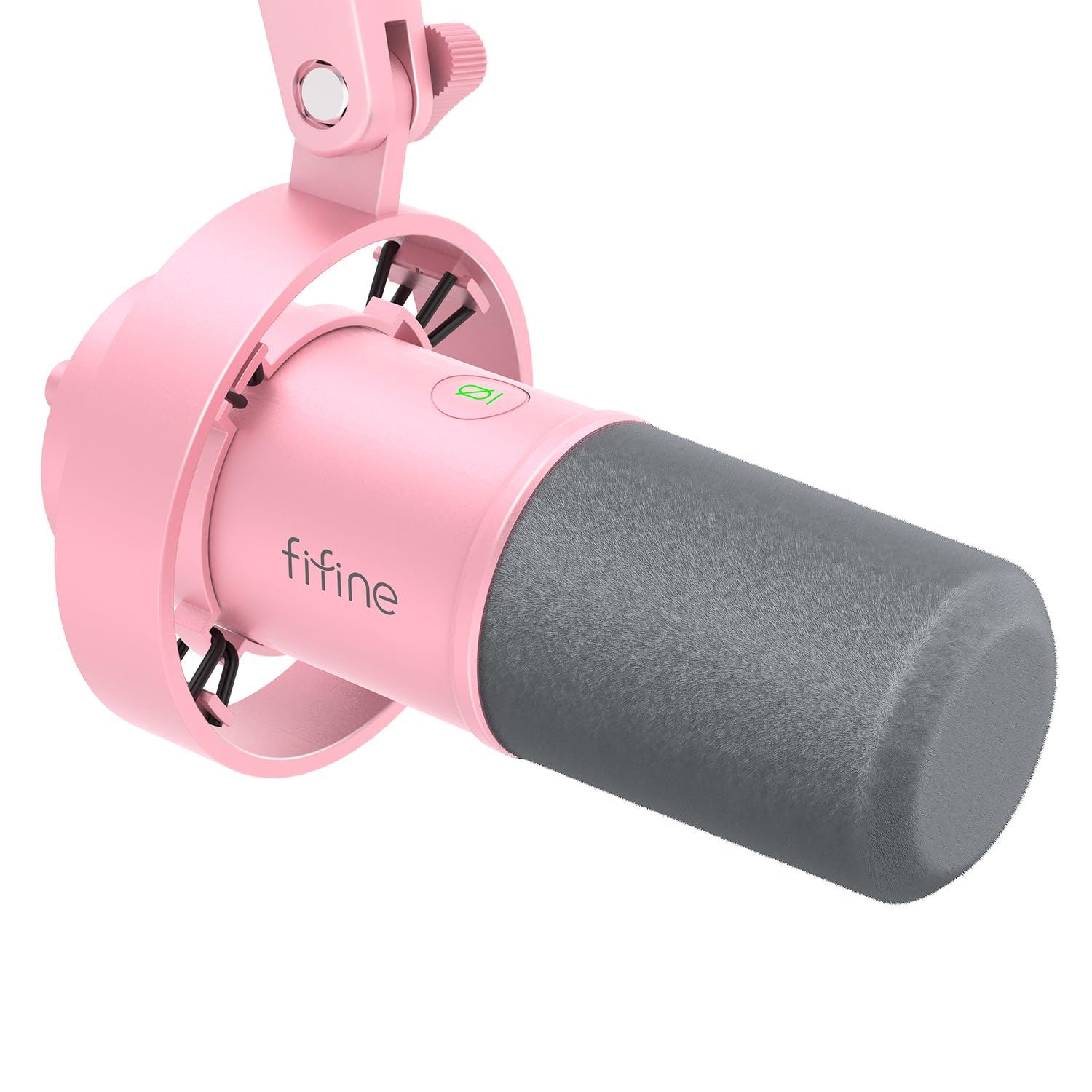
- Connects by USB or XLR.
- Includes a shock mount, windscreen, USB cable, and 5/8'' to 3/8'' adapter.
- A boom arm, mic stand, and XLR cable are not included.
Best For: Podcast and voiceover users who want a shock mount and USB/XLR options without a stand.
MAONO PD100
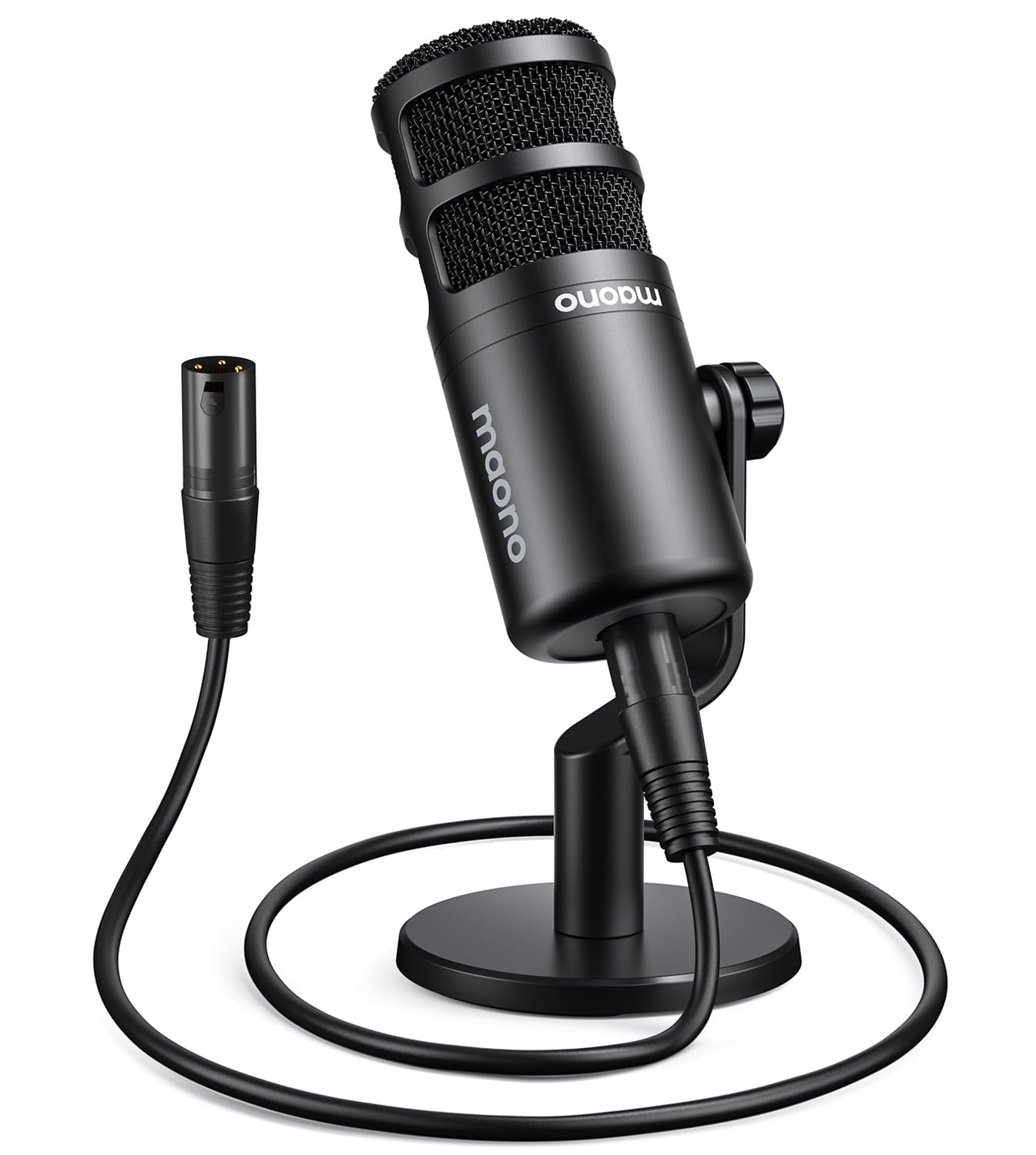
- Includes a desktop stand, rod extender, metal base, and XLR cable.
- Uses XLR connectivity.
- Has a cardioid pattern and built-in double-layer pop filter.
Best For: New home-studio users who want an XLR-only mic with a desktop stand and cable included.
FIFINE K669D
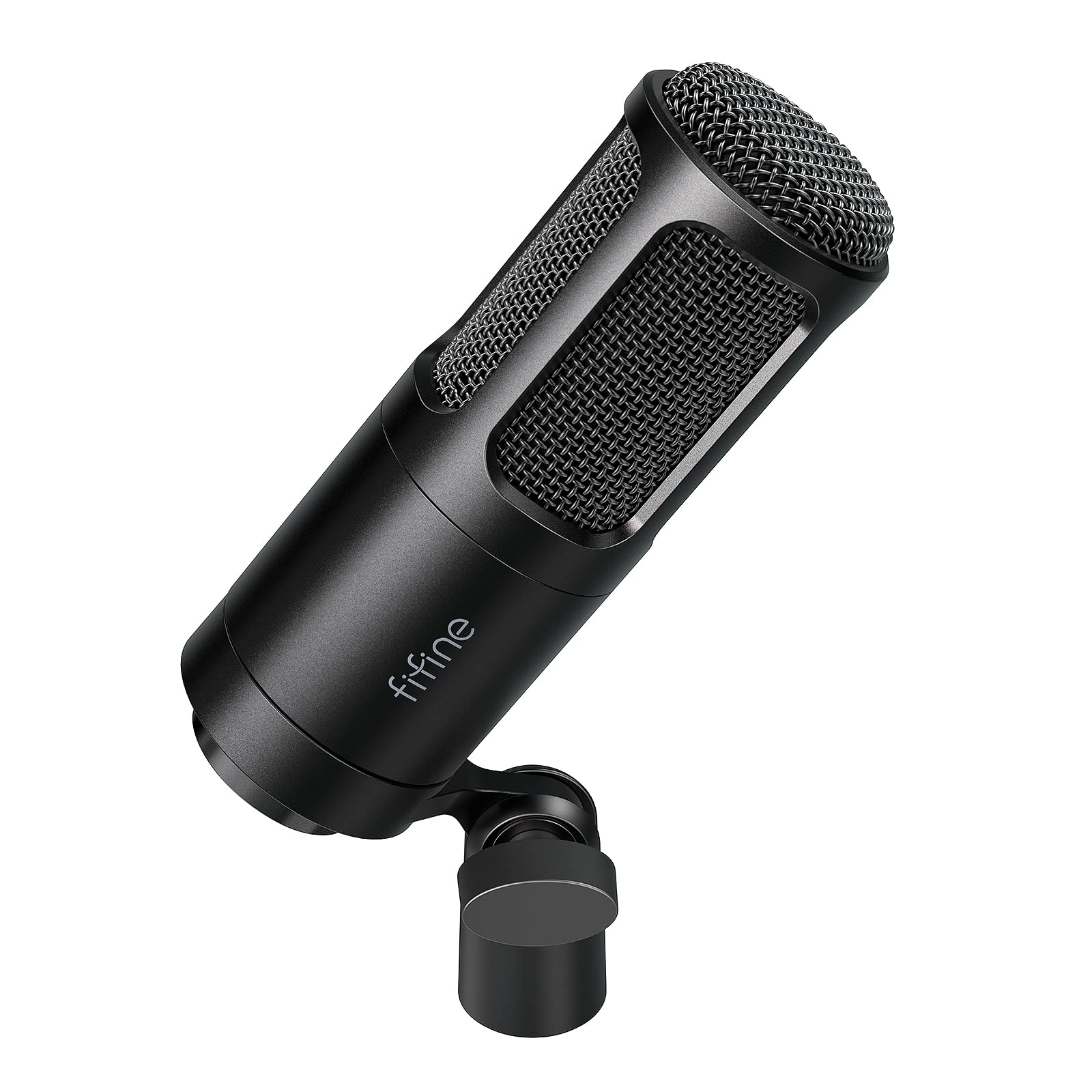
- Uses XLR connectivity only.
- Includes a tripod stand.
- The suggested recording range is 1.5 to 4 in.
Best For: Creators with an interface or mixer who want a dedicated XLR dynamic microphone.
Broadcast-Ready USB/XLR Controls
SAMSON Q9U XLR/USB Dynamic Broadcast Microphone
The Samson Q9U pairs an XLR analog output with USB-C, making it a flexible choice for a broadcast or podcast setup that may change over time. Its USB connection supports 24-bit/96kHz digital recording, and zero-latency headphone monitoring helps you hear your voice while recording.
A cardioid pattern minimizes ambient pickup, while an internal shock mount and dual-layer windscreen address mechanical noise and plosives. The microphone does not include an arm or stand in the supplied details, so plan how it will be mounted.
Choose it when its dual connection and onboard monitoring suit your workflow.
Best For: Podcasters and streamers who want USB-C convenience alongside an XLR studio connection.
| Pros | Cons |
|---|---|
|
|
Choose the Q9U if you want a broadcast microphone that can connect directly to a computer now and to an interface or mixer over XLR. Its USB-C recording resolution and zero-latency monitoring are useful when you need to hear yourself without routing through separate equipment.
Check your mounting plan before buying, since the supplied details do not identify a stand or arm as included. Its mute switch works on both outputs, which helps keep one control available across connection types.
App-Based Voice Shaping
MAONO Dynamic Microphone, USB/XLR Podcast PC Microphone with Software, EQ,Tap-to-Mute, Headphone Jack, Gain Knob & Volume Control, Studio Mic for Broadcast, Recording, Streaming & Gaming (PD400X)
The MAONO PD400X combines a dynamic capsule and cardioid pickup with USB and XLR outputs for home recording, podcasting, and streaming. Over USB, Maono Link provides Standard and Advanced modes, with controls for EQ, limiter, compressor, mic gain, and monitor mix.
A three-in-one digital knob adjusts mic gain, headphone volume, and monitor mix, while tap-to-mute has an LED indicator. The XLR output connects to a mixer, professional interface, or portable PA system.
Check which accessories you need for your desk, since the supplied details do not identify a stand or cable package.
Best For: Home recordists who want USB and XLR plus software controls for shaping a voice.
| Pros | Cons |
|---|---|
|
|
The PD400X is a fit for someone who wants USB and XLR flexibility with software-based voice adjustments available over USB. The combined knob keeps common monitoring and gain controls close at hand, while the XLR output allows connection to a mixer or interface.
Check your preferred mounting hardware and cable needs before ordering because the supplied facts do not clarify what comes in the box. Consider whether you will use the app controls; they are a central feature of this model.
Software Presets and Noise Controls
MAONO Dynamic Microphone-XLR USB Podcast Recording Mic: for Vocal Recording, Content Creation, Home Studio, Voiceover, with 192kHz/24bit, Noise Reduction, Mic Gain, Monitoring, Mute (PD300X)
The MAONO PD300X offers USB and XLR connections alongside a suite of audio controls aimed at podcast recording, streaming, and content creation. Its USB mode supports the advertised 192kHz/24bit sampling rate, and MAONO Link includes visual EQ, limiters, compressors, and high-pass filters.
Four preset modes provide a way to switch settings for different uses. The microphone also has a five-level noise reduction system, zero-latency monitoring, and a smart knob that combines gain, headphone volume, and monitoring functions.
Check the included mounting and cable arrangement before buying, as those details are not clear here.
Best For: Creators who want USB/XLR flexibility and software presets for varied recording tasks.
| Pros | Cons |
|---|---|
|
|
Choose the PD300X if you expect to switch among recording, streaming, and podcast tasks and want preset modes plus software processing. USB keeps setup straightforward, while XLR provides a connection path to a mixer or other equipment.
The headline sampling rate applies to its digital recording feature; it does not describe what comes with the microphone or how it will sound in every setup. Verify mounting and cable needs before ordering, since those package details are not established here.
Boom Arm and USB Software Kit
MAONO XLR/USB Dynamic Microphone Kit, RGB Podcast Mic with Software, Mute, Gain Knob, Volume Control, Boom Arm for Streaming, Gaming, Voice-Over, Recording-PD200XS Black
The MAONO PD200XS is a dynamic XLR/USB microphone kit with a cardioid pattern, an adjustable boom arm, and USB software controls. MAONO Link supports EQ, limiter, and compressor adjustments in USB mode, alongside RGB lighting choices.
Its smart knob handles mic gain and headphone volume, and a one-click mute key has an LED indicator. The included kit has a shock mount and USB-C cable, but it does not include an XLR cable.
That makes it convenient for USB recording out of the box, while an interface-based setup requires sourcing the XLR cable separately.
Best For: Streamers and podcasters seeking a dual-output mic with an included adjustable boom arm.
| Pros | Cons |
|---|---|
|
|
The PD200XS suits a desk-based streamer or podcaster who wants the boom arm included and can use USB software controls. It also has an XLR output, so the same mic can connect to a mixer or interface, but that setup needs a separately sourced XLR cable.
The included USB-C cable supports computer use, and the one-click mute and headphone controls keep basic adjustments accessible. Confirm your desk and mounting needs before choosing the kit.
Compact RGB Desktop Setup
FIFINE XLR/USB Gaming Microphone for Streaming Podcasting, PC Computer RGB Mic, with Gain Knob, Mute Button, Monitoring Jack, Gamer Mic for Recording Video Creation-AmpliGame AM8 White
The white FIFINE AmpliGame AM8W combines USB and XLR connections in a compact desktop microphone for gaming, streaming, podcasting, and voiceovers. Over USB, its controls include tap-to-mute, a gain knob, headphone monitoring, and headphone volume adjustment.
RGB lighting can be switched or changed with a tap, also in USB mode. For XLR use, point the end-addressing microphone toward the audio source and work within its suggested 2 to 6 in recording range.
The supplied details do not establish a stand or XLR cable package, so check mounting and connection accessories for your setup.
Best For: White-desk streamers who want a compact USB/XLR microphone with onboard controls.
| Pros | Cons |
|---|---|
|
|
Choose the AM8W if its white finish and compact desktop form suit your streaming space, and you value USB controls with an option to move to XLR. The RGB lighting, mute, gain, and headphone controls are USB-only, so an XLR-centered workflow will not retain those functions.
Pay attention to the end-addressing orientation and suggested recording distance when arranging the mic. Check whether you need a stand or XLR cable, as the supplied product details do not confirm those accessories.
Boom Arm for a Flexible Desk Position
FIFINE XLR/USB Gaming Microphone Set, Dynamic PC Mic for Streaming Podcasting, Computer RGB Mic Kit with Boom Arm Stand, Mute Button, Headphones Jack, for Recording Vocal Voice-Over-AmpliGame AM8T
The FIFINE AmpliGame AM8T pairs a dynamic USB/XLR microphone with a metal boom arm and desk clamp. USB provides plug-and-play computer recording, RGB controls, mute, gain, and headphone monitoring; XLR connects to a mixer or sound card.
The clamp fits desks less than 2 inch thick, and the arm can be repositioned to change microphone angle. This kit includes an 8.2ft USB-to-USB-C cable, but no XLR cable.
Its combination of mounting hardware and dual connectivity suits a desk setup that may later add an interface, provided you source the XLR lead separately.
Best For: Streamers who want an XLR/USB mic kit with a repositionable boom arm.
| Pros | Cons |
|---|---|
|
|
The AM8T is a practical pick if you need both a boom arm and a USB/XLR microphone in one desk kit. Its clamp has a defined desk thickness limit, so check the surface where you plan to mount it.
USB is the ready computer connection and exposes the mute, gain, RGB, and headphone features. For XLR, you will need to supply a cable and connect an appropriate mixer or sound card.
Stand-Free USB/XLR Podcast Mic
FIFINE Dynamic Microphone, XLR/USB Podcast Recording PC Microphone for Vocal Voice-Over Streaming, Studio Metal Mic with Mute, Headphone Jack, Monitoring Volume Control, Windscreen-Amplitank K688
The FIFINE AmpliTank K688 is a metal dynamic microphone with USB and XLR connections, a cardioid pattern, and a shock mount. Its supplied details describe a 130dB SPL figure and a suggested close recording position for voice work.
Over USB, tap-to-mute, gain adjustment, and headphone monitoring controls are available. The microphone includes an 8.2ft USB-C to USB-A cable, shock mount, and adapter, while the boom arm, mic stand, and XLR cable are not included.
It fits creators who already own mounting hardware and want a mic that can connect directly to a computer or into an XLR recording chain.
Best For: Podcast and voiceover creators who already have a stand or boom arm.
| Pros | Cons |
|---|---|
|
|
Choose this K688 if you already have a stand or boom arm and want a microphone that can move between computer USB and an XLR interface. The included shock mount, cable, and thread adapter cover several setup needs, but XLR recording still requires a separate cable.
Its onboard mute and monitoring controls are USB-only, so check your workflow before relying on them in an interface-based setup. Confirm the mounting hardware you own will suit the included adapter.
Shock-Mounted USB/XLR Recording
FIFINE XLR/USB Dynamic Microphone, Studio XLR Vocal Podcast Microphone for Recording, USB Streaming Mic with Mute Button, Gain Knob, Headphones Monitoring for Voice-Over, Video-Amplitank K688 Pink
This pink FIFINE AmpliTank K688 pairs USB and XLR connectivity with a dynamic capsule, cardioid pattern, shock mount, and windscreen. Its supplied facts identify 130dB SPL and a suggested XLR cable-to-interface arrangement for recording.
A USB cable, shock mount, and thread adapter are included; a boom arm, mic stand, and XLR cable are not. Mute, volume, and monitoring controls work over USB.
That makes it a flexible microphone for a creator who has or plans to buy mounting hardware, while XLR recording calls for a separate cable and suitable mixer or interface.
Best For: Podcast and voiceover users who want a shock mount and USB/XLR options without a stand.
| Pros | Cons |
|---|---|
|
|
This K688P fits a creator who wants a shock-mounted mic with both USB and XLR but has a separate mounting plan. Its USB connection brings the mute and monitoring functions; its XLR output can join a studio chain with a separately sourced cable.
Check whether the included thread adapter matches your stand, and account for the microphone's pink finish if coordinating a visible setup. It is not a complete stand-and-cable kit.
XLR Desk Mic Kit With Cable
MAONO PD100 XLR Podcast Microphone, Cardioid Studio Dynamic Metal Desk Mic | Compatible with Audio Interface, Audio Mixer, Sound Card for Vocal Recording, Streaming, Voiceover, Music, Content Creation
The MAONO PD100 is an XLR-only dynamic microphone kit with a desktop stand, height extender, round metal base, and 6.56 ft XLR cable. Its cardioid pattern and built-in double-layer pop filter suit podcasting, voice recording, streaming, and content creation.
The compact metal microphone is designed for top-address pickup, so position the speaking end toward your voice. Since it does not have USB, you will need a compatible audio interface, mixer, or sound card rather than plugging it directly into a computer.
The included stand and cable make it a more complete starting package for an XLR desk setup.
Best For: New home-studio users who want an XLR-only mic with a desktop stand and cable included.
| Pros | Cons |
|---|---|
|
|
The PD100 is a sensible choice for a beginner XLR desk setup if you already have, or plan to add, an audio interface or mixer. Unlike USB/XLR models, it does not offer direct computer USB recording, but its package includes a desktop stand, extender, base, and XLR cable.
Check that your interface has a microphone input and that the included desk placement fits your recording position. Its top-address pickup direction also matters when setting up.
XLR-Only Interface Upgrade
FIFINE XLR Dynamic Microphone, Vocal Podcast Microphone with Cardioid Pattern, Studio Metal Mic for Streaming Voice-Over Dubbing Video Recording, Black-K669D
The FIFINE K669D is an XLR-only dynamic microphone for podcasting, streaming, voiceover, and singing. Its cardioid pattern is intended to reduce off-axis background sound, and the supplied details include a 120dB SPL figure and a suggested 1.5 to 4 in recording range.
A tripod stand comes in the package, but an XLR cable does not. The mic has 3/8 inch and 5/8 inch threads for common stand mounting.
It suits a creator building around a mixer or audio interface, but it cannot connect directly to a computer over USB, so verify the rest of the recording chain first.
Best For: Creators with an interface or mixer who want a dedicated XLR dynamic microphone.
| Pros | Cons |
|---|---|
|
|
Pick the K669D if you already record through an interface or mixer and want a dedicated XLR mic with a tripod stand included. Its close suggested placement means you should plan where the mic will sit relative to your voice.
You will need to supply an XLR cable, and it does not offer USB for a simple direct-to-computer connection. Compare its included tabletop tripod with your preferred boom-arm arrangement before buying.
How to Choose Xlr Microphones
How We Picked Best XLR Microphones
This roundup focuses on microphones with an XLR output suited to voice recording, podcasting, broadcast, streaming, or live vocals. It includes both XLR-only models and USB/XLR microphones, since those serve different kinds of recording setups.
USB/XLR picks can connect directly to a computer for an accessible start and also join an interface-based chain later. XLR-only options make sense for buyers who already have a mixer, interface, or sound card.
The list also accounts for what comes in each package. The MAONO PD100 includes a desktop stand and XLR cable, while the FIFINE K669D includes a tripod but no XLR cable.
Desk creators may value the MAONO PD200XS boom arm kit, while those with existing mounting hardware may prefer a microphone-only package. Color and gaming lighting are useful desk considerations, but connection type and mounting needs matter more to compatibility.
Comparing XLR Microphones for Different Setups
The main distinction is whether the microphone can also record over USB. The Samson Q9U, MAONO PD400X and PD300X, MAONO PD200XS, and FIFINE AM8W and AM8T all offer USB and XLR.
Their differences center on monitoring, software controls, included arm hardware, and how much of the recording chain they support. The Q9U emphasizes USB-C digital recording and real-time monitoring.
The MAONO models add software EQ and processing options, while the FIFINE gaming models provide USB-side mute, gain, headphone, and RGB controls.
Mounting and cable inclusion change the out-of-box setup. The PD200XS includes an adjustable boom arm but not an XLR cable; the AM8T includes a boom arm and USB cable, also without XLR cable.
The K688 versions include a shock mount and USB accessories but omit a stand, boom arm, and XLR cable. The PD100 provides a desktop stand and XLR cable, while the K669D has a tripod stand but needs a separate XLR cable.
Match the package to the hardware you already own.
| Product | Standout features | Best for |
|---|---|---|
| Samson Q9UCheck Price |
| Podcasters and streamers who want USB-C convenience alongside an XLR studio connection. |
| MAONO PD400XCheck Price |
| Home recordists who want USB and XLR plus software controls for shaping a voice. |
| MAONO PD300XCheck Price |
| Creators who want USB/XLR flexibility and software presets for varied recording tasks. |
| MAONO PD200XSCheck Price |
| Streamers and podcasters seeking a dual-output mic with an included adjustable boom arm. |
| FIFINE AmpliGame AM8WCheck Price |
| White-desk streamers who want a compact USB/XLR microphone with onboard controls. |
| FIFINE AmpliGame AM8TCheck Price |
| Streamers who want an XLR/USB mic kit with a repositionable boom arm. |
| FIFINE AmpliTank K688Check Price |
| Podcast and voiceover creators who already have a stand or boom arm. |
| FIFINE AmpliTank K688PCheck Price |
| Podcast and voiceover users who want a shock mount and USB/XLR options without a stand. |
| MAONO PD100Check Price |
| New home-studio users who want an XLR-only mic with a desktop stand and cable included. |
| FIFINE K669DCheck Price |
| Creators with an interface or mixer who want a dedicated XLR dynamic microphone. |
Choosing a Podcast or Streaming Microphone
For a home podcast setup that may grow, a dual-output mic lets you begin on USB and move to an XLR interface later. Check whether the functions you care about remain available over XLR: the AM8W and K688 controls, for example, are USB-only.
If you record through software, the MAONO PD400X and PD300X offer app-based processing, and the PD200XS provides software controls in USB mode.
For direct computer use, verify that the microphone supports USB and that the supplied cable matches your computer ports. For interface recording, check whether an XLR cable is included and whether you need a separate stand or arm.
A microphone's USB features do not replace an XLR cable in an XLR setup. Also check suggested speaking distance and orientation where provided, then position the mic so you can speak into its intended pickup side.
Matching an XLR Mic to the Recording Space
Cardioid pickup appears across many of these models and is intended to focus capture toward the speaker while reducing some sound from other directions. Room noise and mic placement still matter.
Several included products are intended for close voice recording; the FIFINE K669D recommends 1.5 to 4 in, while the AM8W suggests 2 to 6 in. Keep the microphone aimed as intended and leave room for a stand or arm that does not obstruct the workspace.
If you record in a shared or untreated room, prioritize a placement that keeps the microphone close and stable, along with pop or wind protection where included. The PD100's double-layer pop filter, the K688 shock mount and windscreen, and the Q9U's dual-layer windscreen and internal shock mount address different handling and plosive concerns.
These features do not remove the need to check your room, interface, and recording position.
Who Should Buy Which XLR Microphone
Choose the Samson Q9U if USB-C recording and zero-latency monitoring are priorities. The PD400X or PD300X suits buyers who want software-based sound adjustment and multiple connection paths.
For a desk kit with an arm, consider the PD200XS or FIFINE AM8T, checking the separate XLR cable requirement. The AM8W fits a compact white desktop setup where USB-side RGB and controls are useful.
For a stand-and-cable XLR starter package, the MAONO PD100 includes both, but requires an interface or mixer. The FIFINE K669D is an XLR-only option with a tripod stand for buyers who can provide the cable.
The K688 models suit those who already own mounting hardware and want USB convenience alongside XLR. Decide first how you will connect and mount the mic, then compare the remaining controls and kit contents.